Oral, written, and printed knowledge all have an element of divisiveness to them. You must know someone else’s language in order to communicate effectively with them and those who can’t read or write are unable to use books to gain knowledge. If you are a professor whose articles have been published, you are held in higher regard than a professor who has not. Folk knowledge seems like it would represent an easily entered community, one that does not require a skill that is difficult to learn. However, knowledge that one person possesses and another does not is divisive in nature. Although folk knowledge can create a small community of people who share a certain type of knowledge or skill, the passing down of specific kinds of folk knowledge deters the existence of a large, open community. One must have a specific skill to be a part of it.
Showing posts with label Written Knowledge. Show all posts
Showing posts with label Written Knowledge. Show all posts
Wednesday, December 14, 2011

Tuesday, December 13, 2011
The end of the end: The FINAL PAPER
The Final Paper.
Can you believe it? We finally got to the end. Oh, but
remember—it’s never really the end because it’s all about the process. And the
process never ends. =]
Because we are on the brink of the digital knowledge
revolution, I was interested in the transition between each of these types of
knowledge. This idea in combination with the discussions we had today in class
prompted me to write this subsequent essay. Enjoy.
Knowledge from antiquity to modern times has been a slave to
the institutions and mediums of each era. As folk knowledge, oral knowledge,
written knowledge, print knowledge, and now digital knowledge have
revolutionized the development and dissemination of information, there have
been dynamic changes altering the very fabric of society. Although each new medium of knowledge
brings unalterable change, societies never truly abandon past mediums of
knowledge because of their necessity and utility.
Monday, December 12, 2011
Salon Notes: Final Exam Review
As I created this blog post, I thought back on all the different assignments and blog posts we had written. It made me realize that even though this class has been difficult, we have all learned a lot about the history and transmission of knowledge as defined by different institutions in power. I think we have also learned a lot about ourselves: how fast we can whip out a blog post, how we work with others, and how (through self-directed learning) we can make any topic interesting and relevant to ourselves. Most importantly, we've learned
IT IS ALL ABOUT THE PROCESS.
Tuesday, November 15, 2011
Mayan+English+Ogham+Stone= Daunting Process
This post pertains to the second part of our Rosetta Stone project, the actual creation of the Rosetta Stone! (For a recap of part one check out my previous post). We had the fortune (or misfortune) of receiving the Mayan group's original phrase, which was written in Mayan hieroglyphs.
 Here is what ensued:

Friday, November 11, 2011
Ogham

Being in the miscellaneous group, my civilization, the ancient Welsh, was one of the few with any form of a written language. Although the Welsh adopted the Latin alphabet, before that they used the Irish alphabet Ogham, a rune type alphabet mainly used for engraving in stone. (For more info on Ogham, check out this post I did a few weeks ago.)
Engraving in stone our own phrase in Ogham was an interesting process to say the least...
Wednesday, November 9, 2011
Papyrus, Stone, or Clay?:Recreating an ancient Greek artifact
If there’s one thing I’ve learned
about this civilizations class, it’s that it’s all about the process. And as
for our ancient artifacts we had to recreate, it was no different. In my group of ancient Greece, we began brainstorming different ideas for the medium we could use. Papyrus was first proposed. Interestingly enough, the word "paper" is etymologically derived from papyros, Ancient Greek for the Cyperus papyrus plant.
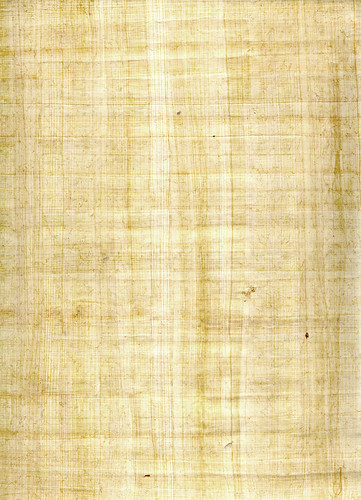 |
| blank papyrus (notice the grains from the reeds) |
Monday, November 7, 2011
Neumes
In sticking with the musical theme going on in the blog lately, I figured I would post about another form of written knowledge, written music, specifically that of the ancient Brits (and therefore Welsh), neumes.


Thursday, November 3, 2011
A Treatise on the Art of Performing Everything

After reading Andrew's post on written music this week, I began thinking about how writing down music would change our responses to, a civilization's sharing of, music. While searching for more information about this in regards to Indian culture, I came upon the Natyasastra, which was basically an instruction guide for the arts written, presumably by many different people, around 100BC or earlier.
Wednesday, November 2, 2011
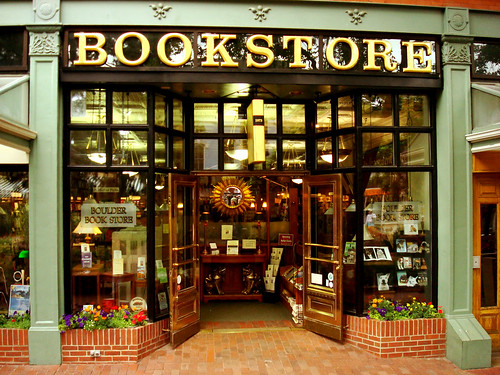
Loco Vendere Liber: ("place to sell the book")
In class we
have discussed institutions of knowledge like the library, the monastery, and
the university, which pertained to written knowledge, but what about the
bookstore?
We might just
assume that the Roman book trade has little pertinence or relevance to today’s
own complicated market, but there are actually many similarities. Granted,
there was no Internet and even no printing press; however, as literacy reached
the masses, the bookstore became an ever-increasing important institution of
knowledge.
Tuesday, November 1, 2011
Written Music?

I love music. Most especially, I love sheet music. Before coming to BYU, I gathered every Elton John, Jon Schmidt, and every Broadway songbooks that I could stuff into one crate. The concept of spreading musical knowledge of sheet music has been one that I am personally grateful for. It’s one thing to hear “Piano Man”, but to actually take part in performing it with my own personal interpretation creates a joy beyond compare.
For this reason I decided to make my blog post about ancient musical notation. In a way, music encompasses all forms of knowledge (folk, oral, written, digital). Today I’d like to focus on the written from of music. ( Below is a sample a Ancient Greek musical notation.) .
.
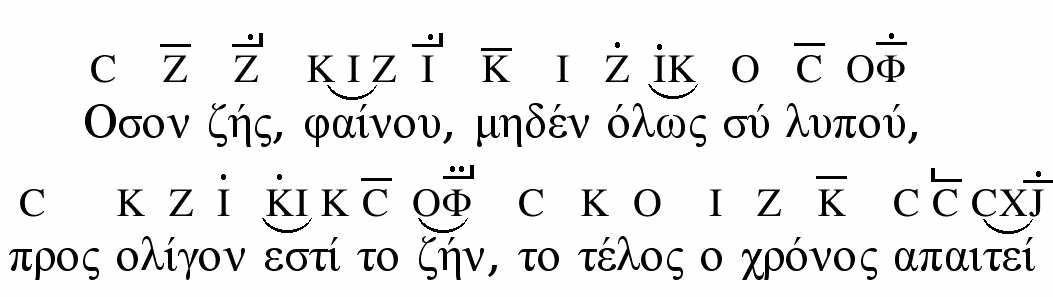 .
. And so began my internet search for the oldest piece of musical notation. I found the Seikilos Epitaph which is an ancient tomb near Turkey (shown in the image at the start of this post). This tomb contains an engraving of the oldest full musical composition ever discovered. The tune is simple and somewhat illogical, but that’s to be expected from ancient times. As Alex pointed out in his post, writing mediums play a big role in determining the sophistication of a written piece. The epitaph was engraved in stone which is a difficult medium to record written information.
The epitaph proved that in order for music to endure, it must be written down. Ancient civilizations didn’t have the modern convenience of audio recordings. So how did familiar tunes spread across civilizations? That’s where the power of musical notation comes in. It allows for civilizations to connect to each other through music.
However, a paradoxical aspect of music is that it can survive without notation as well. The great Jazz musicians incorporated improvisation techniques that allow for more freedom in music without written scales or melodies. All the musician need was chord progression and a general knowledge of the song, and then from there he could create whatever he desired. Music like that can’t be written down, and those who try to duplicate it exactly end up with a cheap rendition of a something pure.
So in conclusion, music sould be recorded almost certainly—just it should be more of a starting point. The best music comes without physical notation but from within the mind and soul of the musician.
Monday, October 31, 2011
The Piraha
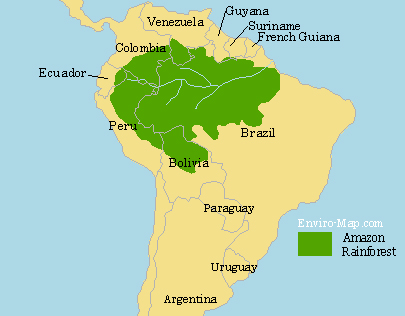 Ah, the ambiguous third blog of the unit. Since there's no specific assignment for this one and I already covered two of the assigned topics in my first two blogs, I thought I would do something a little differently and look at how having no written language affects a modern culture. (I know we've been advised to stay in antiquity but this just sounded like too much fun to pass up.) The Piraha, a tribe in the Amazon jungle of only about 350 people, still has no written language or even a real concept of what a written language is to this day. Living in a literate world without even having a word for "literate" presents some challenges for the Piraha people.
Thursday, October 27, 2011
Ancient Indian Cartography and Poets who Fall into Good Fortune
We are about to delve into the interesting world of Ancient India maps. Unfortunately, there aren't many maps from Ancient India, so this post will be on both maps and the patronage of kings during the Gupta Age. In fact, Bagrow wrote in his "History of Cartography" that "India had no cartography to speak of ...no one in India seems to have been interested in cartography."

He was kind of over-exaggerating. The practice of cartography, according to P.D.A. Harvey, who wrote "The History of Topographical Maps," was either not very popular, or has left us with little evidence of its existence, but it is not non-existent, as Bagrow claims. This may have, perhaps, had something to do with the emphasis on an oral language that the religious class of ancient India employed, but as we will see during the Age of Gupta, written works became quite popular among the ruling class of kings.

He was kind of over-exaggerating. The practice of cartography, according to P.D.A. Harvey, who wrote "The History of Topographical Maps," was either not very popular, or has left us with little evidence of its existence, but it is not non-existent, as Bagrow claims. This may have, perhaps, had something to do with the emphasis on an oral language that the religious class of ancient India employed, but as we will see during the Age of Gupta, written works became quite popular among the ruling class of kings.
Wednesday, October 26, 2011
It's All Greek to Me
You could say that architecture is age old, whether the
design is a rock-enclosed cave or an elaborate, complex palace. So I guess the question is how did
architecture change as a result of a literate society? This question can be
answered through the tradition of ancient Crete and mainland Greece. To
thoroughly study this, I will include the architecture of the Minoans and
Mycenaeans during the Helladic Age and then the Ionian and Classic Greek
cultures of the Hellenic Age.
 |
| inverted columns at the palace of Knossos |
Tuesday, October 25, 2011
Chinese Characters
First off, I wanted to apologize for posting late. My mom came in for parent's weekend on Thursday and left on Monday, so I had completely forgotten about my post.
However, I've chosen to write about a subject I love: Chinese characters. I had the opportunity to take a course in Chinese my senior year, and I absolutely loved it.
The fun thing about Chinese characters is their history. If one examines the evolution of the characters, one learns a lot about how written language changes over the course of history.

"Jiaguwen (甲骨文), or Oracle Bone Script. This is the earliest form of Chinese writing, used from the Middle to Late Shang dynasty (approximately 1500 BCE to 1000 BCE). This script was etched onto turtle shells and animals bones, which were then used for divination in the royal Shang court, hence the name "oracle bones". Consequently, scholars have been using oracle bones as historical documents to investigate the reigns of later Shang monarchs, and surprisingly confirming the veracity of the traditional list of Chinese emperors that was deemed mythological rather than historical. The shape of these characters are often described as "pictographic", in that they resemble stylized drawings of objects they represent.
Chinese characters are a perfect example of how written language changes according to the needs of each generation.
However, I've chosen to write about a subject I love: Chinese characters. I had the opportunity to take a course in Chinese my senior year, and I absolutely loved it.
The fun thing about Chinese characters is their history. If one examines the evolution of the characters, one learns a lot about how written language changes over the course of history.
"Jiaguwen (甲骨文), or Oracle Bone Script. This is the earliest form of Chinese writing, used from the Middle to Late Shang dynasty (approximately 1500 BCE to 1000 BCE). This script was etched onto turtle shells and animals bones, which were then used for divination in the royal Shang court, hence the name "oracle bones". Consequently, scholars have been using oracle bones as historical documents to investigate the reigns of later Shang monarchs, and surprisingly confirming the veracity of the traditional list of Chinese emperors that was deemed mythological rather than historical. The shape of these characters are often described as "pictographic", in that they resemble stylized drawings of objects they represent.
Dazhuan (大篆), or Greater Seal. This stage of Chinese writing flourished from the Late Shang to the Western Chou dynasties (1100 BCE to 700 BCE). Unlike Jiaguwen, which was carved on bones, Dazhuan mainly appeared on cast bronze vessels. In fact, Jiaguwen and Dazhuan overlapped in time, and they might have been the same script but as they were inscribed on different materials their visual styles differ due to the quality of the surfaces.
Xiaozhuan (小篆), or Lesser Seal. This elegant script is the direct parent of the modern, unsimplified Chinese script. Not only are Xiaozhuan characters are more stylized and less "pictographic" like Jiaguwen and Dazhuan, but also exhibits systematic and extensive use of radicals much like modern Chinese. This script has survived the passage of time and continues to be used in the present age in calligraphy and seals.
Lishu (隸書), or Clerkly Script. As its name implies, this script was used by government bureaucrats. While it probably appeared at approximately 500 BCE, Lishu became widely used in the Qin (221 to 207 BCE) and Han (206 BCE to 220 CE) dyansties when the bureaucrats needed a fast and efficient script to handle state matters. The marked difference between this script and the Xiaozhuan is that Li Shu characters have less strokes and a more flowing style, therefore easily adaptable to brushes and pens. Lishu is still occassionally used in the modern age.
Kaishu (楷書), or Standard Script, is essentially the traditional script used today (except in the People's Republic of China). It is very similar to Lishu, but slightly more cursive and contains serif-like (hook or anchor-like) elements at the corners and end of strokes. Kaishu appeared toward the end of the Han dynasty (220 CE).
Xingshu (行書), or Running Script, can be considered a cursive version of Kaishu. Often several strokes are merged into one, especially sequential dots or two strokes perpendicular to each other. It also appeared shortly after the Han dynasty.
Caoshu (草書), or Grass Script, is the most cursive Chinese script. It appeared during the Qin dynasty. The shape of its characters often do not resemble the corresponding Lishu or Kaishu character, in that some strokes are merged into one and others are simply left out."
--http://www.ancientscripts.com/chinese.html
Something else I love about Chinese characters is how each character is more of an idea or a figure than an actual word. Each whole character is made up of lots of other characters or elements. For example, the character for "devil" is made up of the smaller characters: motion + garden + man + privately. And if you take the character "devil" and combine it with trees + cover, you get the character of "tempter". The character that means "to create" is made up of the characters: breath + dust + walking + alive.Chinese characters are a perfect example of how written language changes according to the needs of each generation.
Subscribe to:
Posts (Atom)