Showing posts with label Summer Perez. Show all posts

Tuesday, December 13, 2011

The end of the end: The FINAL PAPER

The Final Paper.
Can you believe it? We finally got to the end. Oh, but remember—it’s never really the end because it’s all about the process. And the process never ends. =]

Because we are on the brink of the digital knowledge revolution, I was interested in the transition between each of these types of knowledge. This idea in combination with the discussions we had today in class prompted me to write this subsequent essay. Enjoy.

       Knowledge from antiquity to modern times has been a slave to the institutions and mediums of each era. As folk knowledge, oral knowledge, written knowledge, print knowledge, and now digital knowledge have revolutionized the development and dissemination of information, there have been dynamic changes altering the very fabric of society.  Although each new medium of knowledge brings unalterable change, societies never truly abandon past mediums of knowledge because of their necessity and utility.

Monday, December 12, 2011

Salon Notes: Final Exam Review

As I created this blog post, I thought back on all the different assignments and blog posts we had written. It made me realize that even though this class has been difficult, we have all learned a lot about the history and transmission of knowledge as defined by different institutions in power. I think we have also learned a lot about ourselves: how fast we can whip out a blog post, how we work with others, and how (through self-directed learning) we can make any topic interesting and relevant to ourselves. Most importantly, we've learned 
IT IS ALL ABOUT THE PROCESS.

Tuesday, December 6, 2011

The Academic Paper Saga: Episode 2

(CONTINUED...)
 
Step 3.5 Rework the Thesis
After some helpful suggestions and advice from Dr. Burton, I decided to change the argument of my thesis. Like I said earlier, I had trouble deciding on an argument to make about Manutius. Instead of pitting his success against other Venetian printers of the time, Professor Burton suggested I make an argument about the cause of Manutius’s success, because there were many possible causes for this. This seemed like a clearer, more arguable direction to go in, so here is my new thesis:

Saturday, December 3, 2011

The Academic Paper Saga: Episode 1

I knew after I went to class on Thursday that I needed to get started on this academic paper as soon as possible. Not only was an entire draft due by Tuesday, but I had no idea what direction I wanted to go in or even how to write a historic persuasive/argumentative essay. During class, I talked with Kody Wood who was in my group for Typography, and we bounced around ideas. We seriously considered doing a group collaborative paper because neither of us had done it before, and we thought it would a cool way to showcase this unit. However, after talking it out with Holland, our other group member, we decided with three busy schedules to accommodate and no definite direction for our paper, we would each embark upon our own paths. And this is the beginning of mine...

Monday, November 28, 2011

Crandall Historic Printing Museum: A Diamond in the Rough


Walking through the wooden doorway felt like travelling back in time. The hardwood floors and colonial feel made it seem like I was touring historic monuments in Philadelphia. I had to keep reminding myself that I was in downtown Provo. The man behind the desk was very gracious and let me explore the rooms while also giving me a tour. There were four rooms with different replica presses in each: the Gutenberg press, Ben Franklin’s printing press, Palmyra’s Grandin press, and the original Desert News print shop.

Wednesday, November 16, 2011

Annotated Bibliography: History of Typography, 1450-1700


Just a quick definition: what is typography?  "...it is not merely the shapes of letters and the manner of making them that requires study but also their size, the spacing between lines, the size and proportion of the printed page..."  (B.L. Ullman, The origin and development of humanistic script, 1960)
 Included is my bibliography with information on the author, publisher, and year. There is a short synopsis on each source and in brackets at the end of each annotation, I include how I found the source and what it was like to consult it in print.

Tuesday, November 15, 2011

Sanskrit, English, and Greek: Recreating a Rosetta Stone

And the process continues! I think when it comes to translating languages or even just basic communicating, the process is never really finished. Even though each group created a Rosetta Stone, a finished product of translation between 3 languages, there were still imperfections, places to improve, things to add in. And so this is our process went…
We received the talipot palm leaf from the ancient Indian group. Thankfully, it was very legible and not terribly difficult to inscribe. We originally knew that it was written in Sanskrit, so that was our starting point. We noticed that there was a line, almost continuous, running through the text, but we didn’t know whether it went on the top or the bottom. Like Dr. Burton said, when using new languages, we have to reorient ourselves, whether we read the language right to left, clockwise, or upside down. From there, we tried to look up the translation character for character or word for word, but there are thousands of characters for Sanskrit, each connoting a different sound which then creates a word. We scrapped that idea and tried to find a specific authentic phrase they might have used. I knew, because Rachel is in our blogging group, that the Vedas were a sacred scriptural text very prominent in ancient Aryan culture. We then looked up the Vedas and found that the inscription came from the last line of the Rig Veda Book One, Hymn One. The phrase looked like this…
(check out this website for more on the Vedas’ history, content, and translation)


Wednesday, November 9, 2011

Papyrus, Stone, or Clay?:Recreating an ancient Greek artifact


If there’s one thing I’ve learned about this civilizations class, it’s that it’s all about the process. And as for our ancient artifacts we had to recreate, it was no different. In my group of ancient Greece, we began brainstorming different ideas for the medium we could use. Papyrus was first proposed. Interestingly enough, the word "paper" is etymologically derived from papyros, Ancient Greek for the Cyperus papyrus plant.
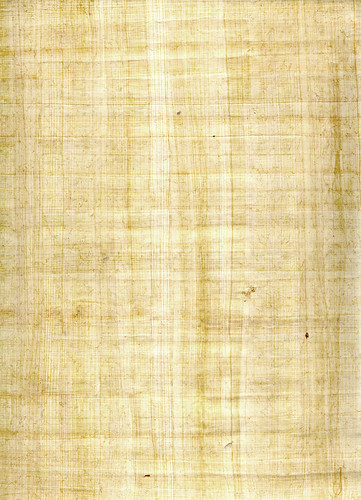
blank papyrus
 (notice the grains from the reeds)

The "Matter of Words"

What if there was some kind of modern exhibit on the effect, influence, and meaning of print over the years? What if it was in a museum on our campus?? Well, you are in luck because at the Museum of Art, the main exhibit is called “Matter of Words” with 46 contemporary works of art by artists Adam Bateman, Harrell Fletcher, and John Fraser. 

83,000 lb sculpture made entirely from books

Wednesday, November 2, 2011

Loco Vendere Liber: ("place to sell the book")

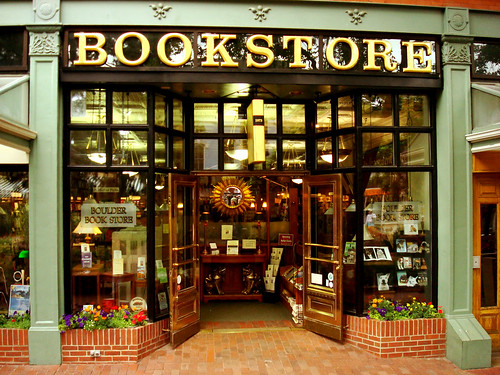
In class we have discussed institutions of knowledge like the library, the monastery, and the university, which pertained to written knowledge, but what about the bookstore?


We might just assume that the Roman book trade has little pertinence or relevance to today’s own complicated market, but there are actually many similarities. Granted, there was no Internet and even no printing press; however, as literacy reached the masses, the bookstore became an ever-increasing important institution of knowledge.

Wednesday, October 26, 2011

It's All Greek to Me


You could say that architecture is age old, whether the design is a rock-enclosed cave or an elaborate, complex palace.  So I guess the question is how did architecture change as a result of a literate society? This question can be answered through the tradition of ancient Crete and mainland Greece. To thoroughly study this, I will include the architecture of the Minoans and Mycenaeans during the Helladic Age and then the Ionian and Classic Greek cultures of the Hellenic Age.
inverted columns at the palace of Knossos

Wednesday, October 19, 2011

You Just Got Schooled

As I have mentioned in previous posts, the Minoans of ancient Crete did have a written language entitled Linear A by the archaeologist Sir Arthur Evans, who is attributed for much of his work with the Linear A script. Now, the artifacts that contain this writing are few and have yet to be fully translated. However, the script of Linear B, which existed later with the Mycenaeans on Crete, has been translated through the use of ancient Greek and can be used to decipher some Linear A characters. 

Wednesday, October 12, 2011

Voice Into Text

When I did my research for oral knowledge in ancient Greece, I checked out a big stack of books. When I got home, I dismissed the book Voice Into Text: Orality and Literacy in Ancient Greece because it didn’t deal strictly with oral culture. But with the admonition to participate in self-directed learning, I decided to explore. I soon found a pertinent chapter entitled “Greek Oratory and the Oral/Literate Division” by Ian Worthington. It discussed the transition from a mainly oral society into a mainly text-based society, and the importance behind these mediums. Sound familiar?

Wednesday, October 5, 2011

Expert Findings--Excavations of Ancient Greek Orality


NEEDED: An authority on ancient Greek oral traditions, preferably Minoan culture with a specialty in mnemonics.
The reigning expert? William Brockliss, professor of Classics 110 and Greek 301 (Classic Greek Poetry). His education comprises of degrees at both Oxford and Yale, and his research encompasses the interaction between Homeric epics and the environment.
Like I mentioned in my post last week, little is known about Minoan culture. What we do know of the civilization is seen through the lens of the Greeks because the Minoans do not have surviving artifacts or stories to represent themselves. And so I will broaden my topic to that of the ancient Greeks. Even then, Professor Brockliss said that Homeric poetry was composed in a specific dialect, making it like an archaeological dig to find the meanings and nuances of the text. And so we will dig! To better reflect the style of my oral interview with Professor Brockliss, I will reflect my findings in question and answer format, touching on a few of the subjects we discussed.

Tuesday, October 4, 2011

Group 7's Video Blog Post

This is Group 7's video blog post on mnemonics and what types of memorizing are really valuable in our time, and were valuable in ancient civilizations.  Enjoy! :)

<iframe width="425" height="349" src="http://www.youtube.com/embed/n0EUBfwm8HE?hl=en&fs=1" frameborder="0" allowfullscreen> - 

Wednesday, September 28, 2011

Dr Seuss v. Homer: A comparison in mnemonics


I was nervous, my palms sweating as I swallowed the knot in my throat. You can do this, I told myself. Just keep calm. But it‘s hard to keep your cool when your entire 5th grade class is staring at you. I closed my eyes, opened my mouth, and the words just started to flow.

Wednesday, September 21, 2011

Playtime

“Deep meaning often lies in childish play.” -Johann Friedrich von Schiller, German poet


I wanted to follow up on my post about the Rubik’s cube because although it may be a relatively new game, the tradition of passing folk knowledge about games is age-old. Games and puzzles have existed to provoke the minds of others and just to have fun. Although this is true, playing games is also a folk knowledge in the way it is passed down and used to connect cultures, families, and friends.


Friday, September 16, 2011

Knowledge Cubed


Have you ever heard of Feliks Zembdegs, Nipat Charoenpholphant, or Che-Ting Chu? Well you should have because they are currently the top 3 ranked Rubik’s cube solvers in the world. 5.66 seconds sounds pretty intense, right? And so this is the tale of my quest to solve a Rubik’s cube.

Thursday, September 15, 2011

From Hearts to Hands


I know that we are wrapping up the unit on folk knowledge, but I could not pass up this opportunity for a great post! Once a week I have an honors seminar where we listen to a lecture from different professors or professionals on campus about what they do. This week’s was from the Museum of Art’s curator and educator Lynda Palma. She talked about the main exhibit entitled “From Hearts to Hands”. Quilts hang in the museum made by a diverse group of African American quilters working in Alabama and its environs during the last half century.

Wednesday, September 14, 2011

Ukulele Jam!

Now I know that we weren’t asked to do history for this post, but I was curious as to the origins of such a small and, before recently, localized instrument. We often associate the ukulele with Hawaii, but the instrument was actually the result of Portuguese influence on the islands during the late 1800s. It soon became a staple in Hawaiian traditions. The ukulele has also had its history throughout pop culture. There is the famous Tiny Tim, whose single “Tiptoe Through the Tulips” (1968), helped make the ukulele popular. And recently, Israel Kamakawiwo'ole’s performance of “Somewhere Over the Rainbow/What a Wonderful World” that exploded on YouTube and reignited an interest in the small instrument. (If you like the melodic sounds of this simplistic instrument, I would suggest looking into NeverShoutNever’s album “Me and My Uke”, “Ukulele Songs” by Pearl Jam’s Eddie Vedder, and also the varied work of ukulele player Nellie McKay. )

So I must preface this story by saying that I am by no means an expert. I am much more like the girl in Professor Burton’s story who was an expert of one day. I began to play the ukulele just last December when my friend gav
e me her old one as a present. She taught me my first chord (C major) and I was let loose.