
Showing posts with label Dane Olsen. Show all posts
Showing posts with label Dane Olsen. Show all posts
Wednesday, December 14, 2011
Final Exam Part 2: The Rise of the Digital Medium

Sunday, December 11, 2011
Final Exam Notes
To review for the final exam, I basically just went back and skimmed all of our group's blog posts from the beginning to remind myself about everything we talked about, then made a spreadsheet like Dr. Burton posted including all of my blog posts, as well as some of my favorites from the other group members.

There's a screen shot of the table, and here's a link to the Google Doc (it might be a little easier to read on that).
Some highlights of the year after looking back:
- The teaching/ learning activities at the beginning of the year and how much they taught me about the effectiveness of folk knowledge
- The King Benjamin speech activity and how it kind of validated everything we had learned about oral knowledge, especially my group's topic about memorization and mnemonics.
- Ogham project. We wrote stuff in stone. Enough said.
- King James Version Bible exhibit at the library. It really made me appreciate the Bible more and inspired me to watch the "Fires of Faith" documentary, which I also really enjoyed.
- My trip to the Fort Worth library, which was a surprising testament to the effectiveness of folk knowledge, which I found in talking to the librarian.
- Overall, just learning the different ways of communicating knowledge, their historical contexts, the outcomes and effects of different media and institutions really intrigued me. It's something I had never thought seriously about before but once I did it really interested me and made a lot of sense.
Now bring on the culmination of it all, the salon!
Tuesday, December 6, 2011
The Influence of Print on Western Society (an academic paper)
 While doing my annotated bibliography assignment (which can be seen here), I found one particular book that struck my interest more than any of the others. It was Printing and the Mind of Man: a Descriptive Catalogue Illustrating the Impact of Print on the Evolution of Western Civilization during Five Centuries. It was essentially an annotated bibliography of important printed works over the past five centuries. I thought it was interesting to see how much print impacted Western society so I decided to write my paper about it...
Monday, November 28, 2011
More about the King James Bible
 Visiting the KJV exhibit at the library (you can read about my experience here)really sparked my interest in the history and background of the printed bible. I had seen articles about a documentary about the coming forth of the King James Version Bible in the Daily Universe that would be on BYU TV, so I thought I would watch it. The second part of the three part series deals a lot with how vital printing was to the spread of the Bible to the masses, especially as it was translated into the vernaculars. There was some really interesting things I learned that I never knew or had even thought of before...
Monday, November 21, 2011
Delving into the Depths of the Library: Fort Worth Edition (An annotated bibliography on the history and influence of the printed book)
Rachel recently posted about her experience "delving into the depths of the library", and I had a similar experience at some different libraries. Since I'm home for the Thanksgiving break, I didn't have access to everyone's favorite library, the HBLL. Instead, I got to explore two of the Fort Worth Public Libraries.
Tuesday, November 15, 2011
Mayan+English+Ogham+Stone= Daunting Process
This post pertains to the second part of our Rosetta Stone project, the actual creation of the Rosetta Stone! (For a recap of part one check out my previous post). We had the fortune (or misfortune) of receiving the Mayan group's original phrase, which was written in Mayan hieroglyphs.
 Here is what ensued:

Sunday, November 13, 2011
King James Bible

The Bible is the single most influential book in the history of mankind, and no where is this more true than with the King James Bible and the English language. I had a chance to go see an original King James Version (KJV) Bible at the exhibit at the Harold B. Lee Library, an experience I won't soon forget. When I first came to BYU and heard about the exhibit, I kind of took it for granted. I didn't really realize what an opportunity this was, having a 400 year old and older sacred texts within a 5 minute walk, until I took the time to go to the exhibit and look at everything. Here's what I found:
Friday, November 11, 2011
Ogham

Being in the miscellaneous group, my civilization, the ancient Welsh, was one of the few with any form of a written language. Although the Welsh adopted the Latin alphabet, before that they used the Irish alphabet Ogham, a rune type alphabet mainly used for engraving in stone. (For more info on Ogham, check out this post I did a few weeks ago.)
Engraving in stone our own phrase in Ogham was an interesting process to say the least...
Monday, November 7, 2011
Neumes
In sticking with the musical theme going on in the blog lately, I figured I would post about another form of written knowledge, written music, specifically that of the ancient Brits (and therefore Welsh), neumes.


Monday, October 31, 2011
The Piraha
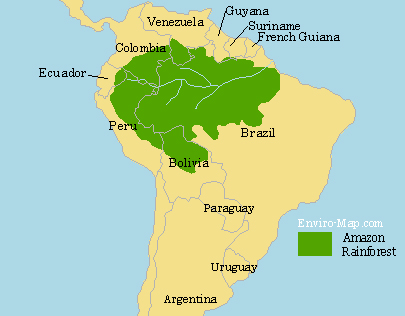 Ah, the ambiguous third blog of the unit. Since there's no specific assignment for this one and I already covered two of the assigned topics in my first two blogs, I thought I would do something a little differently and look at how having no written language affects a modern culture. (I know we've been advised to stay in antiquity but this just sounded like too much fun to pass up.) The Piraha, a tribe in the Amazon jungle of only about 350 people, still has no written language or even a real concept of what a written language is to this day. Living in a literate world without even having a word for "literate" presents some challenges for the Piraha people.
Sunday, October 23, 2011
Universities
Dr. John Searle, an uber-renowned professor at UC Berkeley, in an interview on written language, said this:
But furthermore -- and this is where it really gets exciting -- is you can now create the forms of civilization that are enduring. I'm thinking not just of great art and literature, but of money, property, government, marriage, universities, textbooks, all of the elaborate systems that language has that we can encode in written language that enable us to create an elaborate civilization that is based on our capacity to represent and to create enduring representations. (You can read the whole interview here).
In this post I'm going to discuss the Western world's oldest Univeristy, the University of Bologna in Italy and how writing made it possible.

Monday, October 17, 2011
Ogham
 |
| This is the Vitalianus stone, a bilingual stone in Wales. It's very hard to see the characters, but you can kind of make them out right above the shadow. |

It is an alphabet consisting of a lot of straight lines, which like Dr. Petersen was saying in class, makes them easy to carve into stones. For this reason, Ogham was used in gravestones, memorials, etc., and now there are many Ogham Stones that can be found across Wales and Ireland. The letters referred to as a whole were called "feda" (trees) or "nin" (forking branches) because of their shape. The letters themselves are named after plants and trees. These names may have actually come after the original invention of the alphabet, actually given later simply because the letters are shaped like trees and based off of the collective names. The alphabet consisted of 20 characters grouped into four families based on their formation. As you can see in the picture, one family is strokes on the right side of the stem line, one is on the left, etc.
Ogham was carved into gravestones or stones that marked a certain territory, and it was written around the edge of the stone. It was read from bottom left up, then across the top, then from the top right down. So kind of in the shape of an arch. There is a book from the 13th century that goes into great detail about Ogham and its proper formation called "In Lebor Ogaim". Sounds kind of like a dictionary. This is a fascinating aspect of written language to me; that you use written language to preserve written language. It's self sustaining. When we forget how to spell a word, we don't just make our best guess (unless we're just feeling kinda lazy), we go to a dictionary or to Google to find out how to spell it. That's part of the reason the Lord knew it was so important for Nephi to take the Brass Plates to the Promised Land. As long as we have written language, we have written language. Kind of paradoxical.
Sunday, October 9, 2011
A Word Borrowing Fiesta!
 It seems like all languages are influenced by the languages of other cultures that either conquer them or are geographically near to them, and in many cases there is just blatant word stealing (or word borrowing... is that the politically correct term?). Some easy examples I can think of are "shared" between the U.S. and Mexico. Words like email, yanqui and carro are used in Mexican Spanish, and words like burrito, rodeo and tornado are used in American English. These words seem to only come when there is something new introduced into a culture that there was no word for before. It doesn't seem very common for one language to simply replace its own words with another's. For example, the English language didn't have a word for meat and beans wrapped in flat bread, so "burrito" is used. The Spanish language (or any language for that matter) had no word for messages sent electronically via the internet, so it as well as many others adopted the American word "email". Ancient Welsh was no exception to this.
Tuesday, October 4, 2011
Group 7's Video Blog Post
This is Group 7's video blog post on mnemonics and what types of memorizing are really valuable in our time, and were valuable in ancient civilizations. Enjoy! :)
<iframe width="425" height="349" src="http://www.youtube.com/embed/n0EUBfwm8HE?hl=en&fs=1" frameborder="0" allowfullscreen> -
<iframe width="425" height="349" src="http://www.youtube.com/embed/n0EUBfwm8HE?hl=en&fs=1" frameborder="0" allowfullscreen> -
Monday, October 3, 2011
Seasonal Songs in Wales
Brief Overview
For an extremely brief historical background on Wales, see the first paragraph of my last post. Wales is know as a "land of song". (I had never heard this before, but it says so in The Welsh Academy Encyclopedia of Wales). This title was born in the 19th century when Wales saw an explosion of musical fervor, that was displayed starting in 1861 in Eistedfod, a large Welsh cultural festival. Unfortunately, this 19th century idea masks the rich history of music in Wales dating back to Pagan times. Songs were used to celebrate the seasons (Winter Solstice, the coming of spring, Summer Solstice), the new year, etc. I'm going to go the route of a general authority at conference and divide my blog post into three subtopics that will hopefully better enable you to remember the message of this post.
For an extremely brief historical background on Wales, see the first paragraph of my last post. Wales is know as a "land of song". (I had never heard this before, but it says so in The Welsh Academy Encyclopedia of Wales). This title was born in the 19th century when Wales saw an explosion of musical fervor, that was displayed starting in 1861 in Eistedfod, a large Welsh cultural festival. Unfortunately, this 19th century idea masks the rich history of music in Wales dating back to Pagan times. Songs were used to celebrate the seasons (Winter Solstice, the coming of spring, Summer Solstice), the new year, etc. I'm going to go the route of a general authority at conference and divide my blog post into three subtopics that will hopefully better enable you to remember the message of this post.
Sunday, September 25, 2011
Triads of the Welsh
Before I go into too much detail about the mnemonic "triads" of the ancient Welsh, I want to give a quick background on the people and their origins (which was very confusing and hard to for me to dissect, but this I think this book lays it out fairly clearly). According to A History of Wales from the Earliest Times to the Edwardian Conquest by Sir John Edward Lloyd, there are three peoples that make up the Welsh ethnic group:
- The Neolithic, or basically the original inhabitants of Wales (The Welsh inherited many of their physical attributes from this group)
- The Gaels or Goidelic people, a Celtic group (Greatly influenced the politics and social institutions of the Welsh)
- The Brythons or Britons, also a Celtic group (The Welsh language essentialy comes from this people)
 |
| Modern Day Great Britain |
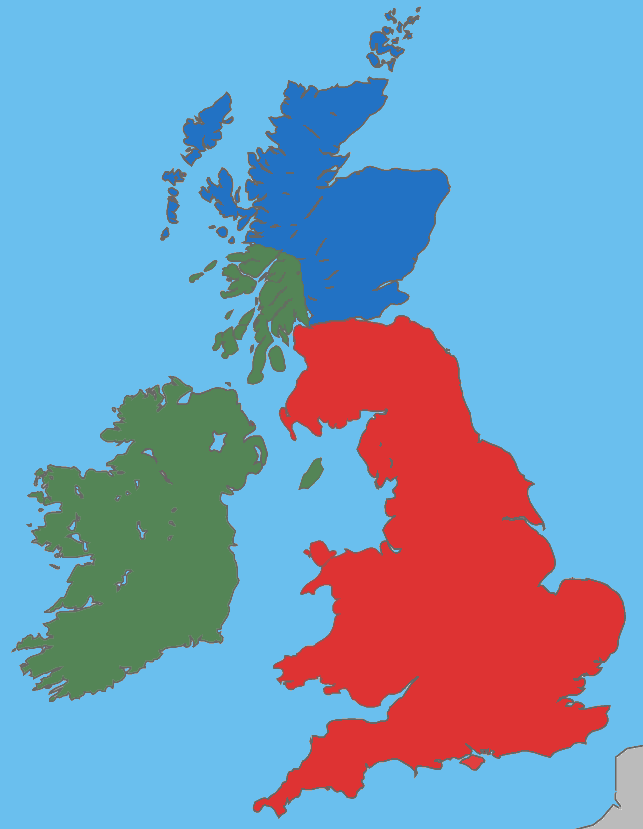 |
| Great Britain about 5th Century AD Red=Brythonic Areas Green=Gaelic Areas Blue=Pictish Areas |
Sunday, September 18, 2011
Water
 I emailed Prof. Burton and asked if we had to do a blog post this week, and he said there was no specific assignment but we were expected to post about something that pursues the learning outcomes and is relative to the units we are in between, folk knowledge and oral knowledge. I decided to do one last post on folk knowledge, and I decided to go to the list and find the topic I was least interested in, learn and subsequently blog about it, and I thought that maybe then I would gain a greater interest in and appreciation for it. So here goes: Water.
Friday, September 16, 2011
Miles and Miles of Spirals (almost a rhyme?)
 |
| Kelly learning a "3 Point stance" (thanks to Tanner for his help) |
Wednesday, September 14, 2011
Learning to Braid... Or Braiding to Learn?
 |
| Thanks to Kelly Williams (being braided) and Sarai Davila (instructing)! |
Sunday, September 11, 2011
Coming of Age
In a variety of cultures throughout the world, "coming of age" rituals or rites of passage are performed to signify the transition of a boy entering manhood. Many are performed at a predetermined age, such as 12 or 18 years old, which I find rather silly. Every person develops and matures at a different rate, so I think it's somewhat naive to tell a boy, "You must become a man now. Do this ritual and automatically you mature and are no longer a child". Science shows us that the brain develops over long periods of time and at different rates in different people. I find it interesting that in most Western cultures there is no set coming of age ritual or rite of passage, and I am rather glad about this. This excruciatingly painful rite of passage in the Satere-Mawe tribe of Brazil is one reason why.
Subscribe to:
Posts (Atom)